You Won’t Believe What Krabi’s Cityscape Just Revealed — My Check-In Moment
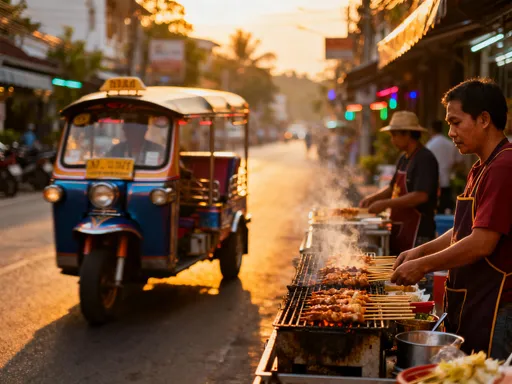
Krabi isn’t just beaches and cliffs — its cityscape surprised me in the best way. Walking through bustling streets at golden hour, I saw neon signs flicker to life, local vendors grilling skewers, and tuk-tuks weaving through traffic like dancers. It wasn’t picture-perfect, but it was real, alive, and absolutely captivating. This is urban Thailand at its most authentic — and I’m breaking down why you should care. While many travelers fly straight to the islands or head straight for the limestone caves, few take a moment to appreciate the quiet rhythm of Krabi Town. Yet, beneath its unassuming surface lies a place where culture, history, and daily life unfold in vibrant harmony. For women who travel not just to see, but to feel and understand, this coastal town offers a rare window into Thailand as it’s truly lived.
First Impressions: When Nature Meets Urban Pulse
Arriving in Krabi Town by road from the airport or nearby Ao Nang, the transition feels gradual and organic. There are no sudden skylines or sweeping freeways — just a gentle unfolding of life along the riverbanks. The first thing you notice is the air: thick with tropical humidity, carrying the scent of frangipani, diesel, and charred meat from roadside grills. Banana trees and coconut palms rise between buildings, their fronds brushing against tiled roofs. The landscape doesn’t surrender to the city; instead, the city learns to live within it.
Unlike resort-heavy destinations where nature is curated for views, Krabi Town lets the jungle press close. Buildings are modest — rarely more than three stories — and often painted in soft pastels now faded by sun and rain. Streets are narrow, lined with shophouses that open directly onto the sidewalk. There’s a rawness here, a lack of polish that can feel jarring at first. But this is precisely what makes it compelling. There are no velvet ropes, no filtered facades. What you see is what exists: a working town where fishermen unload their catch in the morning, monks walk the streets in saffron robes, and children play badminton in open lots between buildings.
The golden hour transforms the cityscape in subtle but powerful ways. As the sun dips behind the limestone cliffs that cradle the town, the light turns honeyed and warm. Neon signs — some in Thai script, others advertising noodle shops or guesthouses — begin to glow. Motorbikes hum in steady streams, their headlights cutting through the gathering dusk. The Krabi River, sluggish and brown, reflects the sky and the silhouettes of fishing boats. This is not the Thailand of glossy brochures. It’s something more enduring — a place shaped by tides, trade, and tradition, not tourism alone.
Why Krabi Town Stands Out in Southern Thailand
Among southern Thailand’s urban centers, Krabi Town occupies a unique middle ground. It lacks the intensity of Hat Yai, a commercial hub buzzing with Malaysian influence and late-night shopping, and it avoids the overwhelming scale of Phuket Town, where traffic congestion and rising property values have reshaped the streetscape. Krabi remains small enough to navigate on foot, yet developed enough to offer comfort and convenience. Its charm lies in this balance — a place where modern life moves at a human pace.
What sets Krabi apart is its refusal to overbuild. While other towns have embraced high-rise developments and international chains, Krabi Town still pulses with local enterprise. Family-run shops dominate the streets, their owners sitting outside on plastic stools, sipping iced tea and greeting passersby. Open-air markets spring up at dusk, selling everything from grilled squid to hand-stitched cotton bags. The absence of large malls or tourist-only zones means visitors encounter real life, not a simulation of it.
This authenticity is not accidental. Krabi has remained relatively insulated from mass tourism due to its geography. The airport is modest, and the town itself isn’t built around a single beach or resort strip. As a result, development has been incremental, community-led, and deeply rooted in local needs. For travelers seeking connection over convenience, this makes Krabi Town a quiet revelation. It’s possible to spend a day here without hearing a single word of English — a rarity in much of Thailand’s tourist belt. And yet, visitors are welcomed with quiet grace, not indifference.
The town’s scale also makes it ideal for families and solo travelers, particularly women who value safety and ease. Streets are well-lit, and locals are accustomed to seeing foreigners walking freely. There’s no sense of being watched or targeted. Instead, there’s a gentle curiosity — a smile from a vendor, a nod from an elderly woman selling mango sticky rice. This is not a place designed for spectacle. It’s a place built for living — and that, in itself, is a kind of beauty.
The Rhythm of Daily Life: A Street-Level Perspective
To walk through Krabi Town at different times of day is to witness a quiet choreography. At dawn, the streets are nearly empty, save for monks in saffron robes moving silently from house to house, collecting alms in their metal bowls. This ancient practice, known as *tak bat*, is not a performance for tourists — it’s a daily act of faith and community. Residents step barefoot onto their doorsteps, hands pressed together in *wai*, offering rice or fruit. The ritual unfolds without fanfare, a thread of tradition woven into the fabric of modern life.
By mid-morning, the town awakens. Shop owners roll up metal shutters, sweep their sidewalks, and arrange displays of tropical fruit, bottled water, and packaged snacks. The sound of sizzling oil rises from open-air kitchens, where cooks flip *pad Thai* in wide woks over gas flames. Motorbikes weave through traffic, their riders balancing toddlers, groceries, or even live chickens in wire cages. Schoolchildren in crisp uniforms bike home, laughing as they race each other down side streets. There’s a sense of order within the apparent chaos — a rhythm that feels both spontaneous and deeply familiar.
Afternoon brings a lull, as heat settles over the town like a blanket. Many shops close for a few hours, their bamboo blinds lowered to block the sun. The riverbank grows quiet, save for the occasional fisherman mending his net. This is the time to sit under an awning with a glass of iced lemon tea, watching the world move slowly. By late afternoon, activity resumes. Vendors set up roadside stalls, grilling skewers of pork and chicken, their smoke curling into the warm air. Families gather at plastic tables, sharing meals and stories.
At night, the town takes on a different character. The riverfront comes alive with locals strolling, children chasing each other with glow sticks, couples sitting on benches. Street food vendors light their lamps, and the air fills with the scent of chili, garlic, and grilled fish. Music drifts from a nearby karaoke bar, but it’s never overwhelming. There’s no need to shout over noise. Conversations happen at a natural volume, laughter rings clearly, and the pace remains unhurried. This is urban life as it should be — not a spectacle, but a shared experience.
Architectural Texture: Sino-Portuguese Vibes and Tropical Adaptations
One of Krabi Town’s most distinctive features is its architecture, particularly along Maharat Road, the main commercial strip. Here, rows of shophouses stand shoulder to shoulder, their facades painted in faded pinks, mint greens, and soft yellows. These buildings are not grand, but they carry a quiet dignity. Their design reflects a blend of Chinese, Portuguese, and Thai influences — a legacy of 19th-century trade when merchants from Malacca and Penang settled in southern Thailand.
The typical shophouse is narrow but deep, built to maximize street frontage while allowing for airflow through the interior. Wide verandas, supported by simple columns, provide shade for pedestrians and a place for shopkeepers to sit. Tall, louvered windows allow breezes to pass through, while intricate woodwork — often in floral or geometric patterns — adds subtle elegance. The roofs are steeply pitched, designed to shed heavy monsoon rains, and many buildings still retain their original tile work, now cracked and moss-covered in places.
What’s remarkable is how these structures have adapted over time. Some have been carefully restored, with fresh paint and repaired woodwork, while others show the marks of decades of use. Wires dangle between buildings, air conditioning units hang from second-story windows, and neon signs advertise mobile phone credit or Wi-Fi hotspots. Yet, even with these modern additions, the buildings retain their character. Renovations tend to be respectful — a new awning in matching colors, a repaired shutter — rather than a complete overhaul. This balance between preservation and practicality is rare in rapidly developing regions.
Walking down Maharat Road feels like moving through layers of time. A century-old shophouse might house a modern coffee shop on the ground floor and a family apartment above. A vintage pharmacy still sells herbal remedies in glass jars, while next door, a young couple runs a boutique selling handmade soaps. The architecture doesn’t demand attention — it simply exists, quietly supporting the life that unfolds within and around it. For travelers who appreciate history not as a museum exhibit but as a living presence, this streetscape is deeply rewarding.
Best Spots to Experience the Cityscape Like a Local
To truly appreciate Krabi Town, you need to slow down and observe from the right vantage points. One of the most rewarding is the riverfront at dusk. As the sun sets behind the limestone hills, the Krabi River turns golden, reflecting the sky and the silhouettes of longtail boats. Locals gather here to walk, talk, and enjoy the cooling breeze. There are no ticketed viewpoints or crowded decks — just a simple concrete path lined with benches and street lamps. Bring a bottle of water, sit quietly, and watch the town transition from day to night.
Another excellent perspective is from a rooftop drink at a modest guesthouse. Several family-run accommodations along Soi Pratu-Phae or near the night market offer small rooftop terraces with plastic chairs and low tables. Order a fresh coconut or a local beer, and take in the view. You’ll see laundry hanging from balconies, satellite dishes tilted toward the sky, and the occasional cat prowling along a tile roof. The sounds are muffled from above — the honk of a scooter, the call of a street vendor — creating a sense of peaceful detachment. This isn’t a luxury skybar, but it offers something more valuable: authenticity.
A third must-do is a walk across the old bridge that spans the Krabi River. Built decades ago, it’s not a tourist attraction, but a functional crossing used by pedestrians, cyclists, and motorbikes. From the center, you can look upstream toward the mangroves and downstream toward the estuary, where fishing boats bob in the current. The bridge vibrates slightly with each passing vehicle, a reminder of its age and utility. Take your time. Pause in the middle. Breathe in the mix of salt air and diesel. This is where the town’s pulse is most clearly felt — not in grand monuments, but in the everyday movement of people and machines.
All of these experiences are low-cost, require no reservations, and are accessible to travelers of all ages. They don’t demand special gear or guided tours. They simply ask for presence — for the willingness to be still, to watch, and to listen. For women who travel with curiosity and care, these moments often become the most memorable.
Navigating the Urban Core: Transport, Safety, and Etiquette
Getting around Krabi Town is straightforward and safe. The town center is compact enough to explore on foot, especially along Maharat Road, the night market area, and the riverfront. Sidewalks are uneven in places, so comfortable walking shoes are recommended. For longer distances — such as from the bus station or a guesthouse on the outskirts — tuk-tuks are widely available. Drivers usually agree on a fare before departure, and prices within town are reasonable, typically ranging from 50 to 100 baht depending on distance.
Motorbike rentals are common, but for those unfamiliar with Thai traffic, riding can be intimidating. Roads are narrow, and motorbikes move quickly, often without clear signaling. For solo travelers and families, it’s often safer and more relaxing to use tuk-tuks or walk. Taxis are less common than in larger cities, but ride-hailing apps like Grab are increasingly available and offer fixed rates, which can help avoid misunderstandings.
Safety in Krabi Town is generally excellent. Crime against tourists is rare, and locals are respectful of visitors. Women traveling alone can feel comfortable walking during the day and early evening, especially in well-lit, populated areas. That said, it’s wise to follow basic precautions: avoid poorly lit streets at night, keep valuables secure, and be mindful of your surroundings. Most guesthouses offer lockers, and many restaurants and shops allow guests to store bags while exploring.
Cultural etiquette is simple but important. When visiting temples, dress modestly — shoulders and knees covered. Remove shoes before entering homes or certain shops. When bargaining at markets, do so politely; a smile goes a long way. Avoid pointing with your feet or touching someone’s head, as both are considered disrespectful. During quiet hours — especially in the early morning during alms-giving — speak softly and move with awareness. These small gestures are appreciated and often met with warm responses.
Beyond the Postcard: Why the Cityscape Matters
For many travelers, Thailand begins and ends with its islands — the white sands of Railay, the turquoise waters of the Phi Phi archipelago, the sunsets of Koh Lanta. These places are undeniably beautiful, but they represent only one facet of the country. Krabi Town reminds us that Thailand’s soul is also found in its streets, markets, and everyday rituals. It’s in the way a vendor folds a banana leaf around sticky rice, the sound of a temple bell at dawn, the quiet dignity of an old man repairing a fishing net.
Engaging with urban Thailand doesn’t diminish the magic of the beaches — it deepens it. When you understand the life that surrounds a destination, your connection to it grows more meaningful. You begin to see not just the scenery, but the people who shape it. You realize that every grilled skewer, every hand-painted sign, every child’s laugh is part of a larger story — one that’s still being written.
Slow travel — the practice of staying longer, moving slower, and observing more — is especially rewarding in places like Krabi Town. It allows you to move beyond the surface, to recognize patterns, to form quiet bonds with a place. You might return to the same coffee shop each morning, nodding to the owner as he hands you your usual. You might learn the name of the woman who sells mangoes by the bridge. These small connections are not transactions. They are moments of shared humanity.
So the next time you plan a trip to southern Thailand, consider arriving in Krabi Town — not just passing through. Spend a night, or two, or three. Walk its streets at different hours. Sit by the river. Taste the food. Listen to the language. Let the rhythm of the city settle into your bones. Because the most unforgettable journeys aren’t always to the most famous places. Sometimes, they begin where the guidebooks end — in the real, beating heart of a destination that welcomes you not as a tourist, but as a guest.