What Baghdad’s Festivals Taught Me About Hidden Joy
You know that feeling when you expect chaos but find celebration instead? That was Baghdad for me. Beyond the headlines, I discovered a city pulsing with color, music, and tradition during its local festivals. From the scent of spiced street food to drumbeats echoing through ancient alleys, the energy was absolutely real. This isn’t just travel—it’s connection. And honestly? I never expected to leave with so much hope in my heart.
First Impressions: Breaking the Stereotype
Stepping off the plane in Baghdad, I carried with me the weight of years of media coverage—images of conflict, warnings of danger, and a narrative that painted the city as a place to avoid. My hands tightened around my bag as I walked through the arrivals hall, half-expecting tension in the air. But what I found instead was warmth. A customs officer smiled as he stamped my passport. Outside, the driver who picked me up greeted me with a simple, sincere 'Welcome.' That small word began to unravel the fear I hadn’t even realized I’d brought with me.
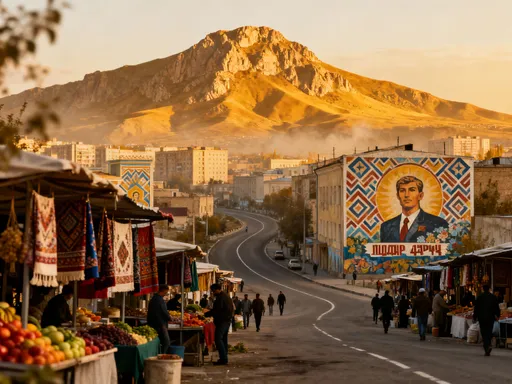
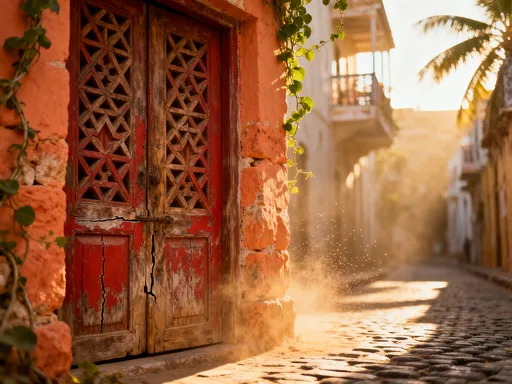
As we drove into the city, I saw children flying kites near the Tigris River, couples strolling along tree-lined sidewalks, and shopkeepers arranging displays of dates and spices. The city moved with rhythm, not unrest. It was festival season, and the streets were alive with color—hanging lanterns, hand-painted banners, and flower garlands draped across market entrances. The contrast between the world’s perception and what I was seeing felt almost surreal. I had expected silence, but Baghdad was singing.
What struck me most was how deeply embedded celebration is in daily life. People weren’t just preparing for a holiday—they were reclaiming joy. Shop owners offered free tea to passersby. Neighbors chatted across balconies, laughing about the same things parents everywhere do: school, chores, and weekend plans. The festival wasn’t a break from life; it was life, amplified. I realized then that timing a visit around cultural festivities does more than provide photo opportunities—it offers a rare window into the soul of a place, where stories are told not through news reports, but through shared meals, music, and memory.
By the end of my first day, I understood that the real risk wasn’t in visiting Baghdad. The real risk was missing it altogether—letting fear dictate where we go, what we see, and who we meet. The city was not hiding from the world; it was inviting it in.
The Heartbeat of Celebration: Maha Sinjar Festival
One of the most profound experiences of my trip was witnessing the Maha Sinjar Festival, a cultural celebration that has grown in visibility and significance across Iraq, including in Baghdad. While its roots lie in the traditions of the Yazidi community in northern Iraq, the festival has become a symbol of national unity and cultural pride, embraced by people of all backgrounds in the capital. During my stay, the city transformed into a living canvas of music, dance, and storytelling, with public squares and parks turned into stages for communal joy.
The heart of the festival beats in its music. As dusk fell, the rhythmic pulse of the daf and bendir drums filled Al-Zawraa Park. Men and women, young and old, formed circles for traditional folk dances like *chobi*, their movements synchronized, their faces lit with concentration and delight. The dance, with its stomping steps and flowing hand gestures, mimics the journey of water through the land—a tribute to Iraq’s deep connection to the Tigris and Euphrates. I stood at the edge of the circle, hesitant, until a woman in a bright embroidered dress pulled me in with a laugh. 'You don’t watch joy,' she said. 'You join it.'
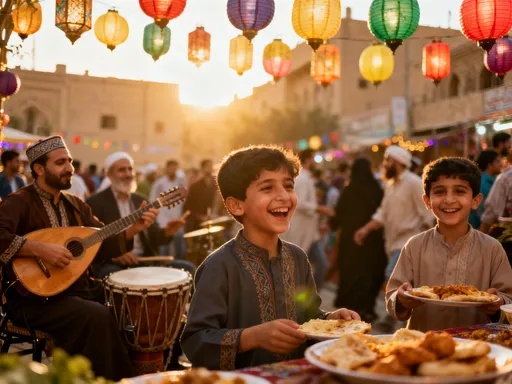
That night, I was invited to a family gathering in the Al-Mansour district. The home was modest but immaculate, decorated with strings of colored lights and hand-stitched tapestries. The family had spent days preparing—cleaning, cooking, and inviting neighbors. We sat on floor cushions as dish after dish was brought out: steaming rice with caramelized onions, grilled lamb spiced with sumac, and golden bread fresh from the oven. Between courses, the elders shared stories of past celebrations, some dating back decades, passed down like heirlooms.
What moved me most was the sense of inclusion. No one asked where I was from or why I was there. I was simply a guest, treated with the same generosity as lifelong friends. When the children performed a short play about the meaning of the festival—unity, remembrance, and renewal—I felt tears in my eyes. This wasn’t performance. It was preservation. In every song, every shared laugh, they were saying: we are still here. And we choose to celebrate.
Flavors That Define a Festival
In Baghdad, festivals are as much about taste as they are about tradition. Food is not an accessory to the celebration—it is the celebration. During the Maha Sinjar Festival and other seasonal events, the city’s culinary heritage comes alive in temporary markets, family kitchens, and street-side stalls. The air hums with the scent of cumin, cinnamon, and grilled meat, a sensory map of generations of recipes passed from mother to daughter, grandfather to grandchild.
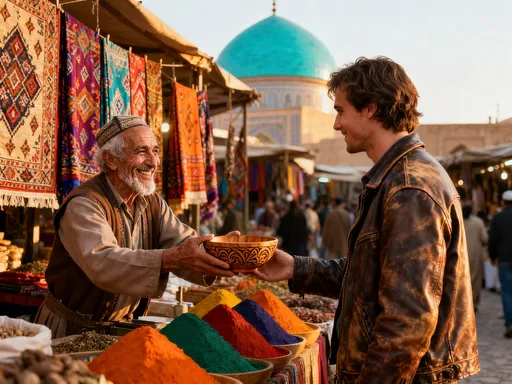
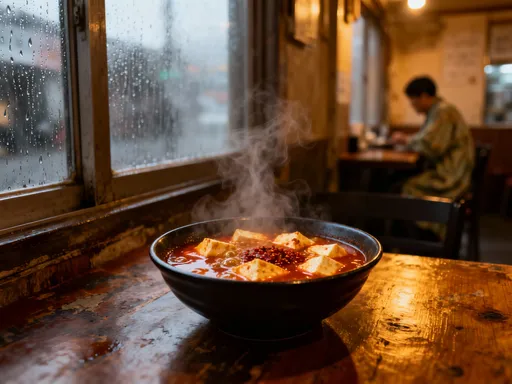
One of the first dishes I tried was *dolma*—grape leaves stuffed with spiced rice, pine nuts, and herbs, slow-cooked until tender. A vendor in the Al-Shorja market handed me a plate wrapped in paper, saying, 'This is how my grandmother made it.' Each bite carried layers of flavor and memory. Nearby, vats of *kubba*—crispy fried dumplings filled with minced meat and bulgur—sizzled in oil, drawing crowds who waited patiently for their turn. And then there were the sweets: *kleicha*, date-filled cookies dusted with powdered sugar, often shaped like crescents or flowers, symbolizing abundance and blessing.
I spent an afternoon walking through the festival’s food alley, a lively stretch near Al-Rashid Street where dozens of vendors set up shop. Each stall told a story. One man explained how his family has made *masgouf*—Iraq’s famous grilled carp—for over a century, using the same wooden smoking pits and tamarind marinade. A young woman sold *halva* infused with saffron and rosewater, saying she learned the recipe from her mother, who sold it at weddings and births. These weren’t just meals—they were acts of cultural continuity.
For visitors, the key to authentic flavors lies in observation and openness. Locals are often happy to guide you to the best spots, especially if you show genuine interest. I learned to ask, 'What do you eat with your family during the festival?'—a question that always led to warm smiles and even warmer invitations. The food of Baghdad’s festivals doesn’t just feed the body; it nourishes connection, one shared plate at a time.
Where Tradition Meets Modern Energy
While the roots of Baghdad’s festivals run deep, their expression is far from static. A new generation is reimagining cultural celebration, blending ancient customs with contemporary creativity. In parks and plazas, you’ll find pop-up art galleries displaying paintings inspired by Mesopotamian myths, or open-air concerts where oud players perform alongside indie rock bands. These spaces are not replacements for tradition—they are expansions of it, proof that culture is not preserved by freezing it in time, but by allowing it to grow.
One evening, I attended a youth-led event in Al-Saadoon Square, where a digital storytelling project projected short films onto the side of a historic building. The films featured elders recounting memories of pre-war Baghdad, interwoven with animations of ancient ziggurats and flowing rivers. Nearby, a graffiti mural depicted a phoenix rising from the ruins, its feathers made of calligraphy from classical Iraqi poetry. Young artists stood beside their work, explaining their vision to curious onlookers. 'We’re not erasing the past,' one said. 'We’re adding our voice to it.'
This fusion of old and new is especially visible in music. At a festival stage in Al-Karkh, I watched a performance that began with a solo on the santur, a hammered dulcimer with origins in ancient Persia. By the end, the musician was joined by a local band playing original songs in Arabic, blending folk melodies with modern rhythms. The crowd, a mix of teenagers and grandparents, clapped and swayed together. There was no divide between generations—only shared appreciation.
These creative expressions are more than artistic experiments. They reflect a broader cultural revival, one rooted in pride and resilience. In a country that has faced decades of upheaval, public celebration becomes a form of resistance—a way to say, 'We are still creating. We are still dreaming.' For young Iraqis, festivals are not just about honoring the past; they are about shaping the future, one song, one painting, one story at a time.
Navigating the City During Peak Festivity
Experiencing Baghdad’s festivals is deeply rewarding, but thoughtful planning enhances both safety and enjoyment. During peak celebration days, central areas like Al-Rusafa and Al-Karkh see increased foot traffic, with families, performers, and vendors filling the streets. Public transportation remains functional, but services like shared taxis and ride-hailing apps can be more convenient during crowded hours. Walking is often the best way to immerse yourself, especially in pedestrian-friendly zones near the Tigris River and cultural landmarks.
Safety is a natural concern for many travelers, but my experience was overwhelmingly positive. Security checkpoints are common, especially near major events, and they operate with professionalism. Locals are generally protective of visitors and quick to offer guidance. I found that dressing modestly and observing local customs—such as greeting elders first or avoiding public displays of affection—helped me blend in respectfully. During religious or national festivals, it’s important to be mindful of sacred spaces and photography etiquette, especially during prayer times or ceremonial moments.
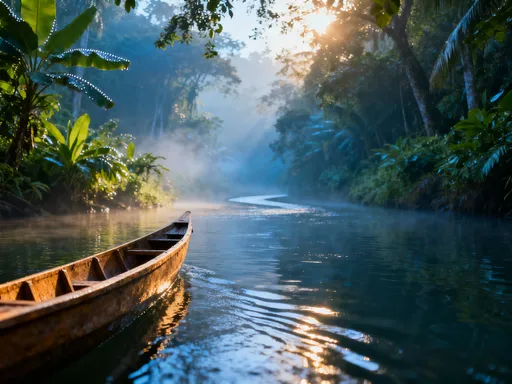
To avoid congestion, I recommend exploring in the early morning, when the city is quiet and light. Sunrise along the Tigris, with fishermen casting their nets and shop owners opening their doors, offers a peaceful contrast to the evening’s energy. Evening events, while vibrant, can be crowded, so arriving early ensures a good viewing spot. If you’re attending large gatherings, staying near your accommodation or using trusted transportation options after dark is wise.
Perhaps most important is the attitude you carry. Baghdadis respond warmly to genuine curiosity and respect. A simple 'Salam alaikum' (peace be upon you) opens doors. Asking permission before taking photos, accepting tea when offered, and learning a few basic Arabic phrases go a long way. The city rewards presence—not just physical, but emotional. When you move through it with humility and openness, you’re not just a tourist. You’re a guest, and that changes everything.
Beyond the Center: Neighborhoods Alive With Their Own Rhythm
While central Baghdad hosts the largest festival events, some of the most authentic moments happen in the city’s residential neighborhoods. Al-Karkh, on the west bank of the Tigris, pulses with its own festival spirit—less polished, more personal. Here, celebrations are community-led, organized by local families and youth groups. I stumbled upon an impromptu parade in a quiet alley, where children danced behind a hand-painted float made of cardboard and lights, singing folk songs passed down through schoolyard games.
In Al-Rusafa, narrow streets were transformed into open-air galleries, with residents hanging embroidered textiles, framed poetry, and family photos in their windows. One afternoon, I followed the sound of drums to a small courtyard where neighbors had gathered for a spontaneous music session. An elderly man played the mijwiz, a traditional double-pipe wind instrument, while others clapped and sang. No tickets, no announcements—just joy unfolding in real time.
These decentralized celebrations offer a different kind of travel experience—one that isn’t guided by itineraries, but by curiosity. I learned to wander slowly, to pause when I saw decorations, to smile at children who waved from balconies. More than once, that led to an invitation: to share tea, to see a family’s festival altar, or to taste a dish I couldn’t name but will never forget. These moments weren’t in any guidebook, and that’s what made them precious.
The beauty of Baghdad’s neighborhood festivals lies in their unpredictability. They remind us that culture isn’t only found in museums or official events. It lives in doorways, in shared recipes, in the way a grandmother teaches her granddaughter to fold *kleicha* just right. To experience them, you don’t need a map. You need only the willingness to say 'yes'—to a conversation, to a dance, to the unexpected kindness of strangers.
Why These Festivals Matter—More Than Just Celebration
Baghdad’s festivals are not merely seasonal events. They are acts of resilience, identity, and healing. After decades marked by conflict and displacement, public celebration has become a powerful tool for reclaiming normalcy and rebuilding social bonds. I spoke with several locals who described the festivals as 'a return to ourselves'—a chance to remember who they are beyond the trauma of recent history.
One woman, a teacher in her fifties, told me, 'When we dance together, we remember that we are not alone. The music, the food, the children laughing—it reminds us that life is still beautiful.' A young musician said the festivals help him 'reconnect with a culture that was almost lost.' These words echoed a deeper truth: joy, when shared collectively, becomes a form of resistance. It says, 'We are still here. We still celebrate. We still believe in each other.'
Public festivals also play a crucial role in rebuilding trust. In a society where suspicion was once a survival skill, shared celebration creates space for connection. Neighbors who may have kept to themselves during difficult years now cook together, dance together, mourn and remember together. These moments foster empathy and understanding, laying the foundation for stronger communities.
For visitors, witnessing this is transformative. It shifts the narrative from one of loss to one of renewal. It reminds us that humanity’s capacity for joy is not diminished by hardship—it is deepened by it. In Baghdad, I didn’t just see a city recovering. I saw a people choosing light, again and again, in the quietest and loudest ways.
Conclusion
Baghdad’s festivals aren’t just about music or food—they’re declarations of life. In every dance, every shared plate, there’s a story of persistence and beauty reclaimed. Traveling here during these vibrant times doesn’t just change your view of a city; it shifts how you see humanity. This is more than tourism. It’s witnessing courage dressed in color. And if you ever get the chance? You gotta go.