You Won’t Believe What I Found in Tashkent’s Markets
Tashkent isn’t just Uzbekistan’s capital — it’s a shopping paradise hiding in plain sight. I went expecting Soviet-era plazas and quiet streets, but what I found was mind-blowing: vibrant bazaars bursting with silk, spices, and handmade treasures at prices that feel illegal. From bustling local markets to hidden artisan corners, the city’s shopping scene is authentic, sensory, and totally underrated. This is not your average mall crawl — it’s a cultural dive with receipts.
First Impressions: The Unexpected Pulse of Tashkent
Arriving in Tashkent by train from the eastern highlands, one might expect a gray, utilitarian city frozen in time — a relic of Soviet planning with little charm. But the truth is far more dynamic. The city greets visitors with wide, tree-lined boulevards, modernist fountains, and an impressively clean and efficient metro system adorned with marble columns and chandeliers. As I stepped out of the Amir Temur Square station, the air carried the scent of roasting nuts and fresh flatbread. Vendors in small kiosks offered green tea in glass tumblers wrapped in ornate metal holders, while women in bright headscarves sold bolts of fabric from wooden carts.
What struck me most was the harmony between order and liveliness. Unlike chaotic capitals where modernization has erased history, Tashkent balances its layered past with forward momentum. Soviet-era apartment blocks stand beside restored Islamic courtyards. Young professionals in jeans sip lattes outside cafes while elders play backgammon under plane trees. This duality extends to shopping — there is no single narrative, no one-size-fits-all experience. Instead, commerce here unfolds in layers: from open-air bazaars rooted in centuries-old traditions to sleek shopping centers catering to a new generation.
The shopping journey begins the moment you arrive. Even before reaching your hotel, you’re immersed in a rhythm of exchange — a woman selling embroidered napkins from a basket, a man offering dried apricots by the handful, a stall displaying hand-carved walking sticks. These small interactions are not tourist traps; they are part of daily life. Prices are modest, and vendors rarely pressure. A simple smile or shake of the head is enough to decline. Yet, when you do stop to browse, you’re often rewarded with warmth, stories, and sometimes a free sample of halva or spiced tea. This is commerce with character, where transactions feel personal rather than transactional.
Chorsu Bazaar: A Feast for the Senses
No visit to Tashkent is complete without stepping into the heart of its culinary and commercial soul — Chorsu Bazaar. Located at the intersection of historic trade routes, this domed marketplace has been a hub of commerce for centuries. Today, it remains one of Central Asia’s most authentic and unfiltered bazaars, where locals come to buy everything from breakfast to household goods. Entering through the iconic blue-tiled dome, you’re immediately enveloped in a symphony of colors, scents, and sounds.
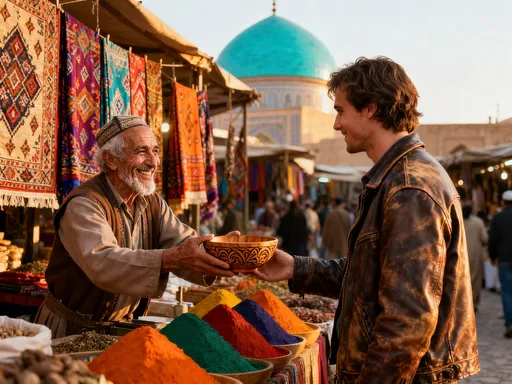
The central rotunda houses rows of produce stalls piled high with pyramids of pomegranates, ruby-red tomatoes, and cucumbers so crisp they glisten. Surrounding them are mountains of dried fruits — golden apricots, chewy figs, and clusters of mulberries — all laid out on woven mats. Spice vendors display rainbow arcs of turmeric, cumin, sumac, and saffron, their powders arranged in perfect gradients like natural pigments. The air is thick with the tang of fermented dairy — qatiq, a thick yogurt-like product, sits in ceramic bowls beside fresh cheeses wrapped in cloth.
But Chorsu is more than just food. Outside the main dome, the market spills into a maze of alleys lined with fabric sellers, coppersmiths, and carpet merchants. Bolts of ikat silk shimmer in the sunlight, while hand-hammered copper bowls reflect the sky. One elderly craftsman demonstrated how he shapes a qozon, the traditional Uzbek cauldron, using only a mallet and anvil. Bargaining here is expected but never aggressive. A polite smile, a modest offer, and a willingness to walk away often lead to fair prices and friendly conversation.
What makes Chorsu remarkable is its authenticity. Unlike sanitized tourist markets in other countries, there are no plastic souvenirs or inflated prices for foreigners. Locals shop here daily, which keeps standards high and prices honest. A kilogram of saffron might cost a fraction of what you’d pay in Europe, and a handwoven suzani textile can be found at a price that reflects labor, not markup. The experience is immersive — you don’t just buy; you see, smell, taste, and feel the culture in motion.
Silk Hunting: From Suzani to Ikat in Local Workshops
Uzbekistan has long been revered for its silk, a legacy of the Silk Road that once connected East and West. In Tashkent, this tradition lives on in both government-run craft stores and independent ateliers tucked into quiet neighborhoods. For travelers seeking meaningful souvenirs, few experiences compare to visiting a silk workshop and witnessing the transformation of raw cocoons into luminous fabric.
Ikat, the most celebrated textile art in Uzbekistan, involves a complex resist-dyeing technique where threads are tied and dyed before weaving. The result is a fabric with blurred, dreamlike patterns that seem to shift in the light. Suzani embroidery, on the other hand, features bold floral motifs stitched by hand onto cotton or silk, often used in dowries and ceremonial garments. Both forms carry deep cultural meaning — the lotus symbolizes purity, the pomegranate represents fertility, and the sun motif speaks to protection and energy.
To find authentic pieces, it’s essential to know what to look for. Machine-printed imitations are common in tourist zones, but real hand-dyed ikat has subtle irregularities — slight color variations, minor misalignments in the pattern — that betray its handmade origin. In a small workshop near the Yunusabad district, I watched a master dyer mix natural pigments from onion skins, indigo, and pomegranate rind. The silk threads hung like ribbons in the sun, each batch taking days to complete. The owner explained that a single bolt of high-quality ikat can take weeks to produce.
Prices vary widely depending on size, complexity, and craftsmanship. A small scarf might cost $20–$40, while a full-length robe or large suzani can range from $150 to $500. Bargaining is acceptable, but it’s important to respect the artisans’ labor. Many workshops offer the option to commission custom pieces, which can be shipped home. For those short on luggage space, smaller items like silk bookmarks, embroidered coasters, or cushion covers make thoughtful and portable gifts.
Mego and Tashkent City Mall: When Tradition Meets Trend
While traditional bazaars offer a deep cultural connection, Tashkent’s modern malls reveal another side of the city — one shaped by globalization, youth culture, and economic growth. Mego Mall, located in the city center, and the Tashkent City Park shopping complex represent a new era of retail. These spaces are sleek, air-conditioned, and filled with international brands like Zara, Samsung, and Adidas, alongside popular local chains.
On weekends, these malls buzz with families strolling through food courts, teenagers snapping selfies by water fountains, and couples browsing electronics. The atmosphere is relaxed, almost European in its pace. Unlike in some rapidly developing cities where modernization erases tradition, Tashkent’s malls integrate cultural elements — Uzbek music plays softly in the background, and holiday displays often feature national motifs like the double-headed eagle or traditional patterns.
What’s particularly interesting is how these spaces reflect shifting consumer behavior without abandoning identity. Young Uzbeks embrace global fashion, but they also wear traditional elements — a man in a modern suit might pair it with handmade leather boots, or a woman in jeans might accessorize with a silk scarf. Local designers are gaining visibility, with pop-up shops showcasing modern takes on Uzbek styles — minimalist suzani jackets, ikat-print sneakers, and embroidered denim.
For visitors, these malls offer convenience and comfort, especially during the summer heat. They’re also a great place to observe how Uzbekistan is evolving — economically, socially, and stylistically. While they may lack the raw authenticity of Chorsu, they provide a balanced contrast, showing that tradition and modernity can coexist. Shopping here isn’t about rejecting the past; it’s about redefining it for a new generation.
Hidden Artisan Streets and Craft Cooperatives
Beyond the well-trodden paths of bazaars and malls, Tashkent harbors quieter corners where craftsmanship thrives in near-obscurity. One such gem is Hastimahal, a historic neighborhood near the Kukeldash Madrasah, where narrow alleys lead to family-run studios specializing in ceramics, wood carving, and calligraphy. These spaces are not designed for mass tourism; many lack signage, and visits are often by invitation or word of mouth.
I was guided to a small pottery workshop by a local friend, where an elderly artisan named Rahim demonstrated how he shapes clay on a foot-powered wheel, just as his father and grandfather did. His hands moved with quiet precision, forming a qozon with gentle pressure. The pieces are fired in a traditional kiln using almond shells for fuel, giving the ceramics a distinctive warm hue. Each item is unique — no two are exactly alike — and priced modestly, often under $30 for a medium-sized bowl.
Not far away, a cooperative of woodcarvers works in a sunlit courtyard, their tools chipping away at walnut and mulberry wood to create intricate panels and furniture. One craftsman showed me how geometric Islamic patterns are drawn freehand before carving begins. These pieces are not just decorative; they carry spiritual meaning, with symmetry symbolizing divine order. Calligraphers in the same complex produce hand-inked verses from the Quran on handmade paper, using reed pens and natural ink.
Supporting these artisans is more than shopping — it’s cultural preservation. Many worry that younger generations are moving to cities or pursuing tech careers, leaving traditional crafts behind. By purchasing directly from studios, travelers help sustain these skills. Some cooperatives offer short workshops where visitors can try their hand at pottery or embroidery, creating a deeper connection to the work. These experiences are humbling and enriching, reminding us that true luxury lies not in brand names, but in the time, skill, and soul poured into every piece.
What to Buy (and What to Skip)
With so many options, it helps to know what’s worth bringing home — and what’s best left on the shelf. Among the must-have items are hand-painted ceramics, especially those with cobalt blue and turquoise glazes; almond-based sweets like halva and gaz, which travel well; and woolen papakha hats, ideal for cooler months. Silk scarves and small suzani panels make elegant, lightweight gifts.
When shopping at Chorsu or artisan studios, keep a few guidelines in mind. Fresh spices are safe and affordable — a small pouch of cumin or sumac costs less than $2. Avoid anything labeled as an “antique” unless you can verify its origin; some vendors sell mass-produced reproductions at inflated prices. Similarly, be cautious of overly perfect textiles — if the pattern is perfectly aligned and the price seems too good, it’s likely machine-made.
Bargaining is expected in markets but not in fixed-price stores. A good rule is to offer 20–30% below the initial price and negotiate politely. Never haggle aggressively — it’s seen as disrespectful. For fragile items like ceramics or glassware, ask for extra wrapping; many vendors provide cardboard boxes or fabric wraps at no cost.
Packing tips: roll textiles instead of folding to prevent creases; place delicate items in the center of your suitcase, surrounded by soft clothing. If you’re buying large pieces, some workshops offer shipping services for a small fee. Always keep receipts, especially for higher-value items, in case of customs questions.
Why Tashkent’s Shopping Scene Is Going Viral
In an age where travel is often reduced to photo ops and influencer check-ins, Tashkent offers something deeper — a chance to engage with culture through the act of shopping. It’s not about accumulating things, but about connecting with people, history, and artistry. The city’s rise as a quiet trendsetter in experiential travel is no accident. Affordability, authenticity, and accessibility converge here in a way that feels rare and refreshing.
Travelers are increasingly seeking meaningful interactions, not just sightseeing. In Tashkent, every purchase tells a story — the elderly woman who spent weeks embroidering a suzani, the dyer who mixed natural pigments by hand, the potter who shaped a bowl using centuries-old techniques. These are not commodities; they are cultural artifacts, each carrying a piece of Uzbek identity.
Moreover, the city is easier to navigate than ever. English is increasingly spoken in shops and hotels, signage is improving, and mobile payment options are expanding. Safety, cleanliness, and hospitality make it ideal for families and solo travelers alike. And unlike overcrowded destinations where tourism has diluted authenticity, Tashkent remains refreshingly uncurated.
Shopping here is not just a pastime — it’s a dialogue. It’s a way to honor tradition, support local livelihoods, and carry home something truly irreplaceable. So the next time you plan a trip, consider Tashkent not just as a stopover, but as a destination where every market stall, every hidden workshop, and every friendly vendor invites you to see — and take home — the soul of Uzbekistan.