You Won’t Believe What I Discovered Exploring Agra’s Hidden Architecture
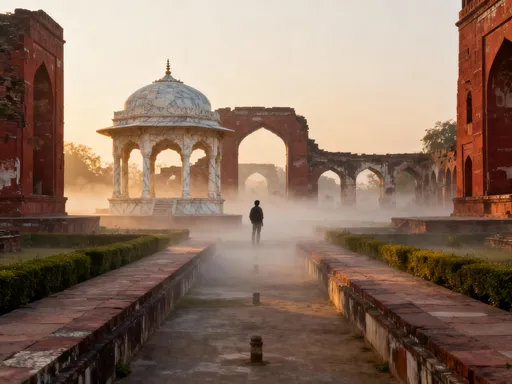
Agra isn’t just about one iconic dome — it’s a living museum of Mughal genius. Walking through its alleys, I was stunned by how stone tells stories here. From intricate inlay work to symmetrical gardens, every structure breathes history. This is more than a tourist trail; it’s a journey into craftsmanship that shaped empires. If you think you know Agra, think again — there’s a whole world beneath the surface waiting to be explored.
Beyond the Taj: Rethinking Agra’s Identity
Agra is often reduced to a single postcard image — the gleaming white dome of the Taj Mahal reflected in still waters. While this monument is undeniably breathtaking, it only reveals one chapter of a much richer narrative. For centuries, Agra served as a thriving imperial capital under the Mughal dynasty, a center of political power, cultural exchange, and architectural innovation. To see Agra solely through the lens of the Taj is to overlook the city’s layered identity as a crucible of design, engineering, and urban planning that flourished across generations.
Travelers frequently rush to the Taj at sunrise, snap photos, and depart without venturing beyond its marble plinth. Yet those who linger discover that Agra’s streets and riverbanks are dotted with palaces, tombs, mosques, and gardens that speak to a broader vision of beauty and order. The city was carefully laid out with fortified walls, grand gateways, and water channels that reflected both practical needs and aesthetic ideals. Its layout followed principles of symmetry and harmony that extended far beyond individual buildings, shaping the entire urban experience.
Understanding Agra as a holistic architectural landscape transforms the way we engage with it. Instead of treating each monument as an isolated wonder, we begin to see them as interconnected pieces of a grand design. The Mughals did not build monuments merely for display; they constructed environments meant to inspire awe, convey power, and reflect divine order. Recognizing this shifts the focus from sightseeing to meaningful exploration — from checking off landmarks to truly understanding the legacy embedded in stone and mortar.
The Soul of Mughal Design: Symmetry, Gardens, and Light
At the heart of Mughal architecture lies a philosophy that blends mathematics, spirituality, and nature into a unified aesthetic. Central to this vision is the concept of symmetry — not just visual balance, but a symbolic representation of cosmic harmony. Structures are meticulously aligned along central axes, with every element mirrored on either side, creating a sense of order that feels both serene and powerful. This principle is most famously embodied in the Taj Mahal, where the mausoleum, minarets, gateway, and garden all conform to a precise geometric plan.
Equally important is the charbagh, the four-part garden layout inspired by Persian traditions and deeply rooted in Islamic symbolism. Divided into quadrants by water channels representing the rivers of paradise, these gardens were designed to evoke a sense of tranquility and spiritual renewal. At the Taj Mahal, the long reflecting pool draws the eye toward the main structure, amplifying its grandeur while reinforcing the connection between earth and sky. The interplay of water and architecture creates shifting reflections throughout the day, transforming the experience of the monument with the movement of light.
Light itself was treated as a building material by Mughal architects. The careful placement of windows, arches, and open courtyards allows sunlight to filter through in deliberate patterns. Inside the Diwan-i-Khas at Agra Fort, for example, marble screens cast intricate shadows that dance across the floor, turning time into a visible rhythm. Even the white marble of the Taj Mahal changes color depending on the hour — soft pink at dawn, brilliant white at noon, golden at sunset, and ethereal under moonlight. These effects were not accidental; they were engineered to evoke emotion and contemplation, reminding visitors of the transient nature of life and the enduring presence of beauty.
Agra Fort: Power Carved in Red Sandstone
Just a short walk from the banks of the Yamuna River stands Agra Fort, a massive citadel that once housed emperors and witnessed the rise and fall of dynasties. Unlike the delicate elegance of the Taj Mahal, the fort exudes strength and authority through its imposing walls of red sandstone. Built primarily by Emperor Akbar in the 16th century and later expanded by Shah Jahan, the fort served as both a military stronghold and a royal residence, blending defensive functionality with refined living spaces.
Entering through the Lahore Gate, visitors are immediately struck by the scale and solidity of the complex. Inside, the layout unfolds like a city within a city, with palaces, audience halls, mosques, and private chambers arranged around open courtyards. The Diwan-i-Aam, or Hall of Public Audience, features a high platform where the emperor would sit to hear petitions from common people. Its sandstone pillars and arched colonnades create a sense of openness and accessibility, yet the elevated throne emphasized the ruler’s divine status.
In contrast, the Diwan-i-Khas, or Hall of Private Audience, reflects a more intimate expression of power. Here, Shah Jahan received nobles and foreign dignitaries in a chamber adorned with intricate floral patterns and inlaid stonework. The hall’s central feature is a carved marble screen, once embedded with precious stones, through which light filtered softly, creating an atmosphere of refined elegance. Adjacent to it are the imperial apartments, including the Khas Mahal, a riverside palace with cooling breezes and panoramic views — a private retreat for the royal family.
The juxtaposition between Agra Fort and the Taj Mahal reveals a fascinating duality in Mughal expression: the fort represents earthly dominion, built to withstand time and conflict, while the Taj embodies spiritual devotion, crafted to transcend mortality. Both were products of the same empire, yet they speak in different architectural languages — one of strength and permanence, the other of love and impermanence. Exploring both offers a fuller understanding of the Mughal worldview, where power and poetry coexisted.
Fatehpur Sikri: A Ghost City of Innovation
Just 40 kilometers from Agra lies Fatehpur Sikri, a ghost city frozen in time yet pulsing with architectural brilliance. Built by Emperor Akbar in the late 16th century to honor the Sufi saint Salim Chishti, this planned capital was intended as a symbol of religious tolerance and cultural synthesis. For a brief period, it thrived as the seat of the Mughal Empire, but within just 14 years, it was abandoned due to water shortages and shifting political priorities. Today, its silent courtyards and weathered stones offer a rare glimpse into a bold experiment in urban design and architectural fusion.
What makes Fatehpur Sikri extraordinary is its seamless blending of Islamic, Hindu, Jain, and Persian influences. The Buland Darwaza, or “Gate of Magnificence,” rises dramatically at the entrance to the Jama Masjid complex, standing over 50 meters high and inscribed with verses from the Quran. Its sheer scale was meant to inspire awe in visitors, but its design incorporates elements like chhatris (domed pavilions) and carved brackets typically found in Rajput architecture, reflecting Akbar’s inclusive vision.
Inside the complex, the Panch Mahal stands out as a unique five-tiered pavilion designed for leisure and cooling. Resembling a stepped pyramid, each level decreases in size, supported by intricately carved columns. It is believed that court musicians performed on the lower levels while royal women observed from above, shielded by latticed screens. The Diwan-i-Khas, another architectural marvel, features a central pillar with a circular platform connected by stone bridges, where Akbar reportedly held interfaith discussions — a physical manifestation of his belief in dialogue and unity.
Despite its abandonment, Fatehpur Sikri remains one of India’s best-preserved examples of Mughal urban planning. The city was laid out with wide avenues, public baths, administrative buildings, and residential quarters, all arranged with precision. Walking through its deserted pathways, one can almost hear echoes of courtly life — the rustle of silk, the murmur of scholars, the clatter of horses. Its emptiness adds to its mystique, inviting reflection on the impermanence of power and the enduring value of creative vision.
Hidden Gems: Underrated Monuments in the City
While the Taj Mahal draws millions, Agra harbors quieter monuments that offer equally profound experiences — places where history feels personal and artistry shines without the glare of crowds. One such treasure is Itimad-ud-Daulah, often called the “Baby Taj.” Built by Empress Nur Jahan for her father, this tomb predates the Taj Mahal and is widely regarded as its architectural precursor. Crafted entirely from white marble, it features delicate pietra dura inlays of flowers, vines, and geometric patterns, setting a new standard for Mughal ornamentation.
Unlike the Taj, which can feel overwhelming in its scale, Itimad-ud-Daulah invites close inspection. Visitors can stand inches from the walls and marvel at the precision of the stone inlays — tiny pieces of lapis lazuli, carnelian, and turquoise embedded into marble to create lifelike blossoms. The tomb sits within a charbagh garden, with water channels and shaded walkways enhancing its peaceful ambiance. Because it receives far fewer tourists, it offers a rare opportunity to experience Mughal artistry in solitude and stillness.
Another overlooked site is Mehtab Bagh, a riverside garden directly opposite the Taj Mahal. Originally part of Shah Jahan’s grand design, it provides one of the most stunning vantage points for viewing the monument, especially at sunrise or under full moonlight. Restored in the 1990s, the garden follows the traditional charbagh layout and serves as a quiet retreat away from the bustling main entrance. It also offers insight into how the Taj was meant to be experienced — not just up close, but from a distance, framed by nature and reflection.
Chini Ka Rauza, though less visited, is another testament to Agra’s architectural diversity. This tomb, built for a Persian scholar and poet, features glazed ceramic tiles — a rare decorative technique in Mughal architecture. Its green and yellow tiles shimmer in the sunlight, giving it a distinct character among the city’s sandstone and marble structures. Though modest in size, it reflects the global connections of the Mughal court, where artisans and ideas flowed freely across Central Asia and Persia.
Materials and Craft: How Marble, Stone, and Skill Shaped History
Behind every Mughal monument is a story of extraordinary craftsmanship and logistical mastery. The construction of these buildings required not only visionary architects but also thousands of skilled artisans — stonecutters, masons, calligraphers, inlay specialists, and engineers — whose names may be lost to history but whose work endures. The materials themselves were sourced from across the subcontinent and beyond, transported over great distances by elephants, oxen, and human labor.
White marble, the hallmark of Shah Jahan’s era, was quarried in Makrana, Rajasthan, over 400 kilometers away. Once delivered, it was shaped with hand tools and polished to a luminous finish. The technique of pietra dura, used extensively in the Taj Mahal and Itimad-ud-Daulah, involved cutting semi-precious stones into precise shapes and inlaying them into marble to form intricate floral and geometric patterns. Each piece was fitted by hand, with no gaps or grout, resulting in a seamless, painterly effect.
Jali, or pierced stone screens, served both functional and aesthetic purposes. Allowing light and air to pass through while maintaining privacy, these lattices were carved from single blocks of marble with astonishing precision. The patterns often followed Islamic geometric designs, symbolizing infinity and the unity of creation. Calligraphy also played a central role, with verses from the Quran inscribed in flowing Persian script across arches and domes. These inscriptions were not merely decorative; they were integral to the spiritual atmosphere of the spaces.
The structural engineering behind these buildings was equally advanced. Domes were constructed using a system of interlocking stones and iron clamps, allowing them to distribute weight evenly and withstand the test of time. Foundations were deep and reinforced, often extending below the water table to ensure stability. Water management systems, including underground channels and stepwells, ensured that palaces and gardens remained cool and supplied with fresh water. Every detail, from the grandest dome to the smallest inlay, was the result of meticulous planning and skilled execution.
How to Explore Agra Like a True Architecture Lover
To fully appreciate Agra’s architectural depth, it helps to approach the city with intention and curiosity. Begin early in the morning, when light is soft and crowds are thin. Start with the Taj Mahal at sunrise, but allow at least two hours to observe not just the main structure, but its surroundings — the garden layout, the symmetry of the minarets, and the changing colors of the marble. Afterward, walk along the Yamuna River toward Mehtab Bagh for a different perspective.
From there, head to Agra Fort, ideally with a knowledgeable local guide who can explain the historical context of each chamber and courtyard. Spend time noticing the contrast between Akbar’s red sandstone buildings and Shah Jahan’s marble additions. Then, dedicate a full day to Fatehpur Sikri, arriving by mid-morning to avoid the midday heat. Wear comfortable shoes, carry water, and take breaks in shaded areas to absorb the atmosphere.
Include at least two lesser-known sites in your itinerary — Itimad-ud-Daulah and Chini Ka Rauza — to gain a more complete picture of Mughal artistry. Visit them in the late afternoon when the light enhances their details. Consider hiring a guide who specializes in architecture or art history, as they can point out subtle features that might otherwise go unnoticed.
When exploring, slow down. Look closely at carvings, inlays, and structural joints. Notice how light enters through arches and screens. Take photographs, but also take moments to simply observe without a lens. Respect the sites by not touching delicate surfaces and following all preservation guidelines. Most importantly, engage with the stories behind the stones — the emperors, the artisans, the spiritual ideals — and let them enrich your journey.
Agra’s architecture isn’t frozen in time — it speaks. Each arch, garden, and inscribed wall invites us to listen. By exploring deeper, we don’t just see monuments; we witness the soul of an empire. Let your next visit be more than a checklist — make it a conversation with history.