Taste the City: Where Wrocław’s Architecture Feasts the Eyes and the Soul
Wrocław isn’t just a city—it’s a sensory love letter. Every cobblestone square hides a flavor, every pastel-colored facade tells a story. I never expected that biting into a warm pierogi would feel like unlocking history, or that sipping coffee beneath Gothic spires could taste this rich. Here, food and architecture aren’t separate—they’re intertwined. You don’t just walk through Wrocław. You taste it. And trust me, your palate and your camera will thank you.
First Impressions: Stepping into Wrocław’s Living Postcard
From the moment visitors step off the train or arrive by bus, Wrocław greets them with a skyline that feels like a storybook illustration come to life. The city, nestled along the winding Oder River in western Poland, blends centuries of architectural evolution into a harmonious whole. Its charm lies not in uniformity, but in contrast—where red-tiled Gothic roofs rise beside sleek glass façades, and ornate Baroque gables stand in quiet dialogue with modernist sculptures. This layered aesthetic creates a sense of continuity, as if each era has left a deliberate brushstroke on a living canvas.
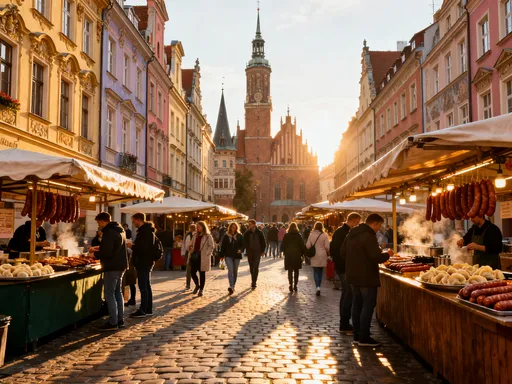
The first view of the Market Square—Rynek—confirms this impression. One of the largest medieval town squares in Europe, it spans over two hectares and is ringed by more than 300 colorful burgher houses. These buildings, originally constructed between the 13th and 18th centuries, were meticulously restored after World War II, preserving their historic character while reviving their civic role. Their facades glow in shades of ochre, rose, and sage, each adorned with intricate stucco, wrought-iron balconies, and gilded shop signs. Walking through the square feels like stepping into a curated exhibition where every detail invites closer inspection.
But Wrocław’s beauty isn’t confined to postcard views. It’s experienced through movement, through the rhythm of footsteps on cobblestones, the scent of roasting nuts drifting from a corner stall, and the hum of conversation spilling from open café doors. The city’s architecture doesn’t merely surround the visitor—it engages them. And nowhere is this more evident than in the way design and dining coexist, each enhancing the other. The visual richness of the surroundings makes the food taste more authentic, while the flavors deepen one’s appreciation for the spaces that house them.
The Market Square: Where Flavor Meets Facade
The heart of Wrocław’s sensory experience beats strongest in the Market Square, a vibrant hub where history, culture, and cuisine converge. Here, the architecture isn’t just a backdrop—it’s an active participant in the dining experience. The arcaded ground floors of the historic townhouses have long served as commercial spaces, and today they host a curated mix of traditional eateries, artisanal bakeries, and open-air food stalls. Dining beneath centuries-old arches, with the sound of church bells marking the hour, transforms a simple meal into a moment of connection with the past.
One of the most beloved local specialties available in the square is kiełbasa, a smoked sausage with deep roots in Polish culinary tradition. Vendors grill it fresh over open flames, the smoky aroma weaving through the air like an invitation. Served with mustard and dark rye bread, it’s a humble dish elevated by its setting. Equally iconic is the honey cake, or miód pitny, a dense, spiced confection layered with centuries of regional craftsmanship. Its warm notes of cinnamon, clove, and honey echo the richness of the surrounding stonework and wooden beams.
But the square offers more than traditional fare. Modern food kiosks introduce international flavors—crepes, falafel, and gourmet sandwiches—while still respecting the historic context. The key to their success lies in presentation: even the most contemporary offerings are served in compostable packaging with locally inspired designs, maintaining visual harmony with the environment. Seating areas, arranged under wrought-iron canopies or beside blooming flower boxes, encourage leisurely meals. Visitors often linger for hours, sipping mulled wine in winter or chilled white wine in summer, all while admiring the play of light on painted facades.
What makes the Market Square exceptional is its ability to balance authenticity with accessibility. It’s not a museum frozen in time, but a living space where locals and tourists share tables, children chase the famous dwarf statues embedded in the cobblestones, and street musicians add a soundtrack to the scene. The architecture provides a sense of grandeur, but the food grounds the experience in warmth and intimacy. Together, they create a space that feels both timeless and immediate.
From Churches to Coffee: Sacred Spaces, Modern Bites
Wrocław’s skyline is defined by its churches—towers that pierce the clouds, their silhouettes visible from nearly every corner of the city. Among the most striking is the Cathedral of St. John the Baptist on Ostrow Tumski, an island considered the birthplace of Wrocław. Its twin spires dominate the riverfront, and within, the interior unfolds in a symphony of Gothic architecture: pointed arches, ribbed vaults, and stained-glass windows that scatter colored light across stone floors. Nearby, St. Mary Magdalene Church offers a more intimate experience, its red-brick exterior and slender tower a testament to the city’s medieval devotion.
What’s remarkable is how these sacred spaces have influenced the city’s modern culinary culture. In recent years, several historic buildings—some formerly monasteries, chapels, or clergy residences—have been thoughtfully repurposed into cafés and bakeries. These transformations honor the past while embracing contemporary life. One such example is a café housed in a deconsecrated chapel near the university district. Its vaulted ceiling and arched windows remain intact, now illuminated by soft pendant lighting. The scent of freshly ground coffee mingles with the faint, lingering impression of incense, creating a meditative atmosphere that invites quiet reflection.
The menu reflects this duality. Alongside artisanal lattes and cold brews, visitors find traditional Polish pastries—chałka (braided sweet bread), sernik (cheesecake), and makowiec (poppy seed roll)—prepared with locally sourced ingredients. The baristas, often young locals with a passion for both history and craft, take pride in explaining the building’s origins while serving a perfectly pulled espresso. It’s not uncommon to hear a customer say, “I’ve never felt so close to history while drinking a cappuccino.”
This fusion of reverence and refreshment speaks to Wrocław’s broader cultural attitude: one of respect without rigidity. The city doesn’t treat its heritage as something to be preserved behind glass. Instead, it integrates it into daily life. Whether it’s a yoga class in a former church hall or a jazz evening in a restored bell tower, the past is not discarded—it’s reimagined. And in the case of food and drink, it’s made delicious.
Culinary Corners in Hidden Courtyards
Beyond the bustling streets and grand plazas, Wrocław reveals another layer of charm through its network of hidden courtyards—podwórka—nestled behind the façades of 19th-century kamienice, or tenement houses. These inner sanctuaries, once used for storage or servant quarters, have been transformed into some of the city’s most sought-after dining destinations. Accessible through narrow passageways or arched gateways, they offer a sense of discovery, as if stepping into a secret world where time slows and atmosphere deepens.
The contrast between the exterior and interior is striking. From the street, many of these buildings appear modest, their entrances unassuming. But once inside, visitors are greeted by lush greenery, vintage furniture, string lights, and walls adorned with local art. Some courtyards feature repurposed industrial elements—old factory gears turned into sculptures, or reclaimed wood used for tables—adding a creative edge to the historic setting. The architecture frames intimate dining experiences, where conversation flows easily and the outside world feels distant.
Restaurants in these spaces often emphasize seasonal, regional cuisine. Menus change monthly, reflecting what’s fresh in local markets—wild mushrooms in autumn, asparagus in spring, berries in summer. Dishes are presented with care, not as elaborate performances but as honest expressions of flavor and season. One popular courtyard bistro offers a modern take on bigos, the traditional hunter’s stew, using slow-cooked cabbage, smoked meat, and dried mushrooms, served with a side of dark rye bread baked in-house. The dish, deeply rooted in Polish tradition, feels new again in this setting.
Wine bars have also found a natural home in these courtyards. With curated selections from Central and Eastern Europe, they introduce visitors to lesser-known varietals—Hungarian Furmint, Slovakian Veltlínske, or Polish Riesling—paired with small plates like pickled vegetables, cured meats, and goat cheese with honey. The ambiance enhances the tasting experience; there’s a quiet elegance to sipping wine beneath a century-old chestnut tree, the sound of a fountain trickling in the background. These spaces don’t just serve food—they cultivate mood, memory, and connection.
The Oder River’s Gastronomic Edge
The Oder River, which splits Wrocław into a mosaic of islands and bridges, has long been a lifeline for trade and transport. Today, its banks are being reimagined as spaces of leisure and gastronomy. Former warehouses, grain silos, and industrial docks—once symbols of the city’s economic past—are now vibrant cultural venues, many housing restaurants, breweries, and open-air food markets. This transformation reflects a broader trend in urban renewal, where industrial heritage is not erased but celebrated, its raw textures and spacious interiors lending themselves perfectly to modern culinary experiences.
One of the most popular destinations along the river is a converted shipping warehouse turned craft beer hall. Its exposed brick walls, steel beams, and high ceilings retain the rugged character of its origins, while long wooden tables and communal seating foster a convivial atmosphere. The brewery specializes in Polish interpretations of international styles—smoked porter, honey lager, and herbal wheat beer—each inspired by local ingredients and traditions. Visitors can sample flights of beer while learning about the brewing process from on-site artisans, or enjoy a hearty platter of cold cuts and pickles as the sun sets over the water.
The riverfront also hosts seasonal food festivals, drawing crowds with the promise of diverse flavors and scenic views. During summer, open-air events feature food trucks offering everything from vegan pierogi to duck confit tacos, all set against the backdrop of illuminated bridges and passing riverboats. Walking paths line both sides of the Oder, allowing visitors to stroll from one culinary stop to the next, pausing at picnic areas or riverside benches to enjoy their purchases. For families, couples, and solo travelers alike, these pathways offer a relaxed way to experience the city’s flavors without rushing.
What makes the riverfront unique is its sense of openness. Unlike the enclosed intimacy of courtyards or the formality of historic squares, this area feels expansive and inclusive. Children play near fountains, cyclists glide by, and musicians perform on floating stages. The architecture here doesn’t dominate—it accommodates. And in doing so, it creates a space where food is not just consumed, but shared, celebrated, and remembered.
Modern Meets Medieval: Wrocław’s Architectural Balance
One of Wrocław’s most compelling qualities is its ability to balance preservation with progress. While many historic cities struggle with the tension between old and new, Wrocław embraces both with confidence. Contemporary architecture doesn’t compete with medieval structures—it complements them. This is evident in the way new restaurants and cafés are designed: not as imitations of the past, but as respectful dialogues with it. Glass façades, minimalist interiors, and innovative lighting are used to highlight, rather than overshadow, the surrounding heritage.
A prime example is a modern bistro located just off the Market Square, where a sleek, transparent entrance connects a 14th-century stone wall with a newly constructed dining room. Inside, the contrast is deliberate—the rough texture of ancient masonry stands beside polished concrete floors and suspended pendant lights. The menu mirrors this duality, offering classic Polish dishes reinterpreted with modern techniques. Duck breast with red cabbage reduction and caraway foam, or potato dumplings with foraged herbs and brown butter, reflect a cuisine that honors tradition while embracing creativity.
This architectural and culinary synergy is not accidental. Wrocław has invested in urban planning policies that encourage sensitive development. New buildings must adhere to height restrictions, material guidelines, and design reviews to ensure they harmonize with their surroundings. As a result, the cityscape feels cohesive, not chaotic. Even large-scale projects, such as the revitalization of the former university library into a cultural center, have been executed with attention to historical context, preserving key elements while adapting spaces for contemporary use.
The food scene benefits from this balance. Chefs draw inspiration from centuries-old recipes, but they’re not bound by them. They experiment with fermentation, fermentation techniques, and regional foraging, bringing a scientific curiosity to traditional flavors. At the same time, bakeries still use wood-fired ovens, and butchers age their meats using time-honored methods. The result is a culinary landscape that feels both rooted and dynamic—a reflection of the city itself.
Why This Fusion Matters: A City That Feels Alive
Wrocław’s magic lies in the way it makes history feel immediate. It doesn’t present its past as a distant relic, but as a living presence woven into everyday life. The fusion of architecture and cuisine is not merely aesthetic—it’s emotional. When you eat pierogi in a courtyard once used by artisans, or sip coffee in a chapel where prayers were once said, you’re not just observing culture. You’re participating in it.
This synergy creates a deeper kind of travel—one that engages more than the eyes. It invites the senses to work together, to let the texture of a stone wall inform the taste of a honey cake, or the height of a cathedral inspire a moment of quiet reflection over tea. In a world where many cities risk becoming generic, Wrocław stands out for its authenticity. It doesn’t perform heritage; it lives it.
For the traveler, especially one seeking meaningful connections and enriching experiences, Wrocław offers a rare gift: the chance to slow down and truly savor a place. It asks you to notice the details—the curve of a gargoyle, the warmth of a freshly baked roll, the laughter from a courtyard table. It rewards attention with beauty, and curiosity with flavor.
So come to Wrocław not just to see, but to taste. Let the city unfold through your senses, one bite, one step, one sunlit square at a time. In doing so, you’ll discover that the most memorable journeys aren’t measured in miles, but in moments—when architecture and appetite meet, and the soul feels fully fed.