You Won’t Believe What I Ate in Provence
Provence isn’t just lavender fields and sun-drenched villages—its soul lives on the plate. I went searching for authenticity and found myself knee-deep in market stalls, olive oil tastings, and family-run farms. Every bite told a story of sun-ripened tomatoes, fragrant herbs, and generations-old recipes. This isn’t just food; it’s a way of life. If you think you know Provençal cuisine, think again—what I discovered changed how I see French food forever.
First Bites: My Arrival in Provence and the Food Culture Shock
Stepping off the train in Marseille, the air carried something unexpected—not the sea alone, but a wild blend of sun-warmed earth, rosemary, and garlic roasting on a grill. I had come to Provence expecting beauty, yes, but not this deep sensory immersion. As I drove inland through rolling hills dotted with cypress trees and stone villages, I realized I wasn’t just entering a region—I was stepping into a culinary philosophy. My first real meal was in a modest café in the village of Gordes, where the menu offered only three dishes. I chose the tian de légumes, a layered casserole of eggplant, zucchini, tomatoes, and onions, baked slowly until the edges caramelized and the herbs released their perfume.
What struck me wasn’t just the flavor—though it was extraordinary—but the quiet confidence of the dish. There were no flourishes, no exotic ingredients flown in from afar. It was simply vegetables, harvested at their peak, treated with respect. The tomatoes tasted like summer captured in red flesh; the zucchini melted on the tongue. This was food without pretense, yet deeply satisfying. I realized then that Provençal cuisine doesn’t chase trends. It honors rhythm—the rhythm of the seasons, the land, and family tradition. Unlike the precision of Parisian haute cuisine or the rich, meat-heavy dishes of Lyon, here, vegetables were the stars. The soil, the sun, the mistral wind—all of it shaped what appeared on the plate.
That first meal set the tone for the entire journey. I began to understand that in Provence, food is not a separate event but woven into the fabric of daily life. It’s in the way people greet each other with a basket of figs, how a simple lunch stretches into two hours, and how even a casual snack involves a crusty baguette, local cheese, and a drizzle of olive oil. This was not dining; it was living. And as I continued through the region, I found that every bite deepened my appreciation for a culture that sees cooking as both art and responsibility.
Markets as Temples: The Heartbeat of Provençal Cuisine
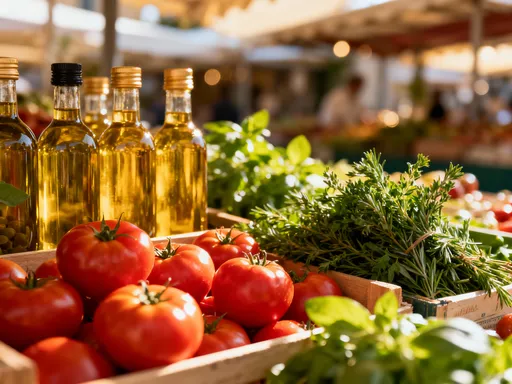
If the soul of Provence lives on the plate, then its heartbeat pulses through the open-air markets. These are not staged performances for tourists but living, breathing hubs where the community gathers to exchange goods, news, and tradition. I visited several over the course of my stay, each with its own character. The market in Aix-en-Provence unfolds every Tuesday, Thursday, and Saturday along Cours Mirabeau, a grand boulevard shaded by plane trees. Stalls overflow with pyramids of cherries, baskets of golden mirabelles, and wheels of goat cheese dusted with ash. The scent of lavender mingles with that of fresh basil and roasting chestnuts.
In L’Isle-sur-la-Sorgue, known as the “Venice of Provence” for its canals, the Sunday market draws crowds from across the region. Here, I watched an elderly woman test the ripeness of a melon by tapping it gently, then nodding with satisfaction before placing it in her woven basket. I followed her lead, learning to choose produce not by appearance alone but by sound, weight, and fragrance. Vendors don’t rush. They explain—how this olive oil is from last week’s pressing, how those apricots were picked at dawn. There’s pride in their voices, a quiet assurance that what they offer is not just food but heritage.
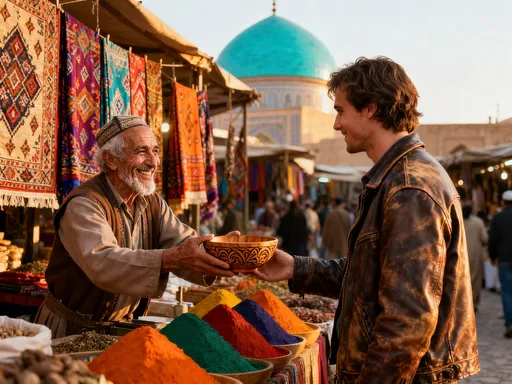
One of my most memorable finds was in Apt, a hilltop town famous for its candied fruits. At a small stall draped in checkered cloth, a farmer offered samples of sun-dried tomatoes preserved in olive oil and thyme. They were intense, almost meaty in flavor, with a hint of sweetness. Nearby, a spice seller handed me a pinch of saffron—deep red threads that stained my fingers yellow. “This is from the Luberon,” he said. “One gram can flavor an entire pot of soup.” I bought a small bundle, knowing it would last months but be worth every euro.
Shopping in these markets taught me more than recipes—it taught me rhythm. The best time to go is early morning, just as the stalls are being set up. Bring a reusable bag, cash in small bills, and don’t be afraid to ask questions. Most vendors welcome curiosity. They’ll tell you how to store herbs, which fish is best grilled, or when the figs will peak. This is not commerce as transaction; it’s commerce as connection. And in that exchange, you begin to understand that Provençal cuisine isn’t made in kitchens alone—it’s grown, harvested, and chosen with intention.
Olive Oil and Herbs: The Foundations of Flavor
No description of Provençal food would be complete without olive oil and herbs—two ingredients so central they might as well be considered sacred. I visited a small olive mill just outside Nyons, a town renowned for its black olives. The owner, a third-generation producer named Jacques, greeted me in stained work clothes and offered a taste of oil pressed only hours before. He poured a small amount into a ceramic spoon and instructed me to warm it with my hand, then inhale deeply before sipping. The aroma was grassy and bright, with a peppery note that tingled at the back of the throat.
Jacques explained that true Provençal olive oil comes from olives harvested in late autumn, when they’re fully ripe. The cold-press method ensures no heat is used, preserving flavor and nutrients. He contrasted this with industrial oils, which often blend varieties and use heat to extract more volume—resulting in a bland, lifeless product. “Good oil,” he said, “should make you cough a little. That’s the sign of polyphenols, the healthy compounds.” I tried a few more samples—one buttery and mild, another sharp and green—and began to appreciate the nuances like a wine connoisseur.
Later that week, I toured a herb farm in the foothills of the Luberon. Rows of rosemary, thyme, savory, and oregano stretched toward the sun, their leaves releasing fragrance with every step. The farmer, Marie, let me crush a sprig of thyme between my fingers. “Smell that?” she asked. “That’s what goes into every dish here.” She explained how her family has grown herbs for over fifty years, drying them slowly in the shade to preserve essential oils. “You can buy herbes de Provence in any supermarket,” she said, “but most are stale, or mixed with filler. The real blend is simple—just what grows here.”
She taught me how to make my own: equal parts thyme, rosemary, oregano, marjoram, and a pinch of lavender. I brought the mixture home and used it in everything—from roasted chicken to tomato sauce. That small act—grinding dried herbs in a mortar—felt like a quiet rebellion against convenience. In Provence, flavor isn’t added; it’s cultivated. And when you taste oil fresh from the press or herbs picked that morning, you realize that the foundation of great food isn’t complexity—it’s authenticity.
From Farm to Table: Meeting the Producers Who Keep Traditions Alive
One of the most profound moments of my journey came not in a restaurant but on a rocky hillside in the Alpilles, where I met Sylvie, a goat farmer who raises her animals with a gentle hand and a deep respect for the land. Her herd of white Alpine goats grazed freely, their bells echoing in the distance. She invited me into the barn, where her daughter was milking by hand. “We make cheese every morning,” Sylvie said. “It’s too much work to do it twice.” She handed me a small round of chèvre, still warm, its rind dusted with ash. I spread it on a piece of baguette and took a bite—the flavor was tangy, creamy, alive.
This was food with a face, a name, a story. Sylvie didn’t ship her cheese to supermarkets. She sold it at the local market, to people who knew her, who trusted her. “They know if the goats are sick, if the weather was bad,” she said. “We’re all in this together.” Her words stayed with me. In a world of anonymous supply chains, this kind of transparency felt revolutionary. I thought of the plastic-wrapped cheese I buy at home—labeled “French style,” but mass-produced and flavorless. Here, every bite carried meaning.
I also visited the Camargue, a vast wetland where pink flamingos wade through shallow lakes. Along the salt flats, I met a salt harvester who raked fleur de sel by hand, the delicate crystals forming on the surface of evaporating seawater. “It’s all about the wind and the sun,” he said. The salt was flaky, moist, with a clean mineral taste. I bought a small jar and used it to finish dishes at home, a reminder of the sea and the patience required to harvest it properly.
On the coast in Cassis, I joined a fisherman at dawn as he pulled up nets heavy with sea urchins, rockfish, and squid. “I only take what I can sell today,” he said. No freezers, no long storage. His catch went straight to the village market. I tasted a sea urchin roe on a slice of baguette—briny, sweet, like the ocean distilled. These encounters reminded me that real food takes time, care, and respect. It’s not extracted; it’s nurtured. And when you meet the people behind your meal, eating becomes an act of gratitude.
Cooking Like a Local: My Hands-On Experience in a Provençal Kitchen
Wanting to go deeper, I signed up for a cooking workshop in a restored 18th-century farmhouse outside Bonnieux. The class was led by a retired chef named Claire, who insisted we begin by visiting the morning market. “No recipe works if the ingredients aren’t right,” she said. We returned with glossy eggplants, plump tomatoes, fresh basil, and a bundle of green beans. The kitchen was warm, rustic, with copper pots hanging from the ceiling and a long wooden table where we gathered to chop, stir, and taste.
We made soupe au pistou, a vegetable soup enriched with a basil-garlic paste similar to pesto. “No cream, no butter,” Claire said. “The flavor comes from the vegetables and the time they spend together.” We simmered the soup for nearly two hours, allowing the flavors to meld. Then, at the very end, we stirred in the pistou—raw, fragrant, vibrant. The result was simple but profound, a bowl of comfort that tasted like summer in a pot.
Next came ratatouille, but not the version I knew from frozen meals or tourist menus. Claire’s method was slow and deliberate—each vegetable cooked separately before being layered and baked. “If you throw everything in at once, the zucchini turns to mush,” she warned. The final dish was rich and textured, each vegetable retaining its character. For dessert, we made cherry clafoutis, a custard-like cake studded with dark cherries. As it baked, the scent filled the house, drawing neighbors to the door.
What struck me most was the absence of urgency. No one rushed. We tasted as we cooked, adjusted seasoning, laughed at spilled flour. Claire emphasized that Provençal cooking isn’t about perfection—it’s about presence. “You don’t need ten ingredients,” she said. “You need three, and the courage to let them shine.” That lesson stayed with me. Back home, I started cooking differently—slower, more mindfully, with fewer ingredients and more attention. I began to see cooking not as a chore but as a form of care.
Beyond the Plate: How Food Shapes Daily Life in Provence
In Provence, food is not an isolated event but the rhythm of life itself. Meals are long, unhurried affairs. Lunch often begins at noon and lasts two hours, with multiple courses, wine, and conversation. Dinner is equally deliberate, served late, under the stars, with candles flickering on the table. I observed families gathering in village squares for apéritifs—glasses of pastis or rosé, accompanied by olives and anchovies. Bakeries open before sunrise, filling the streets with the smell of fresh bread. Even a quick snack involves thought—a slice of tartine, a piece of fruit, a small cheese.
This isn’t indulgence; it’s intention. The pace allows space for connection, for presence, for joy. I noticed how people ate—sitting down, using real plates, savoring each bite. There was no eating over the sink or scrolling through phones. Food was treated with respect. And this rhythm, I realized, contributes to well-being in ways beyond nutrition. It’s a form of mindfulness, a daily practice of slowing down.
Studies have linked the Mediterranean lifestyle—including its diet, social eating patterns, and relaxed pace—to lower rates of heart disease, longer life expectancy, and improved mental health. But in Provence, these benefits aren’t pursued as goals. They’re byproducts of a way of life that values balance, seasonality, and community. I began to see how my own habits—rushed meals, processed snacks, eating alone—were not just less enjoyable but less nourishing. The Provençal model isn’t about strict rules; it’s about creating space for what matters.
By adopting even small elements—eating at a table, sharing meals with loved ones, choosing fresh ingredients—I found my own life becoming more grounded. The kitchen became a sanctuary, not a battleground. And food, once a source of guilt or stress, became a source of pleasure and connection.
How to Bring Provence Home: Practical Takeaways for Travelers and Food Lovers
You don’t need a villa in the Luberon to live like you eat in Provence. The principles are accessible, wherever you are. Start by shopping seasonally. Visit a farmers’ market, if you have one, or learn what grows in your region at different times of year. A ripe tomato in July tastes nothing like one shipped from a greenhouse in January. Prioritize quality over quantity—buy one perfect peach instead of a bag of bland ones. Use olive oil generously, especially in dressings and sautés. Keep a small jar of herbes de Provence on your shelf, or make your own with dried thyme, rosemary, and oregano.
Slow down at meals. Set the table, even if you’re alone. Light a candle. Turn off screens. Eat with your hands when you can—feel the warmth of bread, the texture of cheese. Host a market-to-table dinner: go to the market with friends, buy what’s fresh, then cook together. Let the process be part of the joy. Support local producers—farmers, cheesemakers, bakers. Your choices sustain communities and ensure better flavor.
Grow something, even if it’s just a pot of basil on your windowsill. There’s pride in harvesting your own herbs, however small the yield. And finally, remember that cooking is not a test of skill but an act of love. You don’t need to be perfect. You just need to be present. The magic of Provençal cuisine isn’t in complicated techniques—it’s in attention, in seasonality, in sharing.
These habits don’t require a passport. They require only a shift in mindset—a willingness to slow down, to choose well, to savor. And in that shift, you may find not just better meals, but a better life.
Provence taught me that food is more than fuel—it’s memory, connection, and place. What I tasted wasn’t just delicious; it was honest. As travelers, we often chase views or landmarks, but the deepest experiences come from sharing a meal with locals, smelling herbs on the breeze, or savoring oil pressed that morning. This is the real magic of Provence. And it’s available to anyone willing to slow down, open their senses, and truly taste.