How I Quietly Transformed My Health with Qigong—And Why Monitoring Made All the Difference
For years, I felt constantly drained—busy but not truly alive. I tried quick fixes, intense workouts, even strict diets, but nothing stuck. Then I found qigong, not as a cure, but as a slow, steady practice. Over time, subtle shifts turned into real change. What helped most wasn’t just the movement, but paying attention. Tracking small signals—energy levels, sleep quality, mood shifts—gave me clarity. This isn’t about dramatic results. It’s about staying present with your body, day after day.
The Breaking Point: When Fatigue Won
There was a morning when I sat at the kitchen table, coffee in hand, staring blankly at the wall. My children were getting ready for school, the laundry needed folding, and emails piled up on my phone. Yet I couldn’t move. Not because I lacked motivation, but because my body felt like it was running on a battery that would never charge. This wasn’t the first time. For over two years, I had lived in a state of low-grade exhaustion—what many call burnout, though I didn’t recognize it as such then. I thought I just needed to push harder, wake up earlier, or drink more coffee. I followed fitness trends, joining high-intensity interval training classes that left me sore and more fatigued. I cut out sugar, then added supplements, then cut carbs—each change bringing brief hope, followed by disappointment.
The truth was, my approach to health was rooted in effort, not balance. I believed wellness meant doing more: more exercise, more restrictions, more willpower. But my body responded with deeper fatigue, frequent headaches, and trouble sleeping. I would lie awake at night, mind racing, only to wake up groggy and unrefreshed. My reliance on caffeine grew, and I began to accept this as normal—a trade-off for being a productive mother, wife, and professional. What I didn’t realize was that I was ignoring my body’s signals, mistaking persistence for strength. The turning point came during a routine check-up when my doctor noted elevated blood pressure and suggested I examine my stress levels. That moment forced me to reconsider everything. I began to wonder: what if wellness isn’t about pushing through, but about listening? What if the body isn’t a machine to be driven, but a system to be nurtured?
This question led me to traditional Chinese medicine (TCM), not out of a desire for alternative remedies, but out of curiosity about different frameworks for health. I learned about *qi*—often translated as vital energy—and how TCM views illness as a sign of imbalance, not just malfunction. Rather than seeing this as mystical, I began to interpret it as a metaphor for homeostasis: the body’s natural tendency toward equilibrium. When we ignore fatigue, suppress emotions, or override natural rhythms, we disrupt this balance. Qigong, I discovered, was one of the primary practices used in TCM to restore harmony. It wasn’t about dramatic transformation, but about gentle, consistent reconnection. This idea resonated deeply. I wasn’t looking for a miracle. I was looking for a way to feel like myself again.
Why Qigong? The Low-Key Practice That Actually Stuck
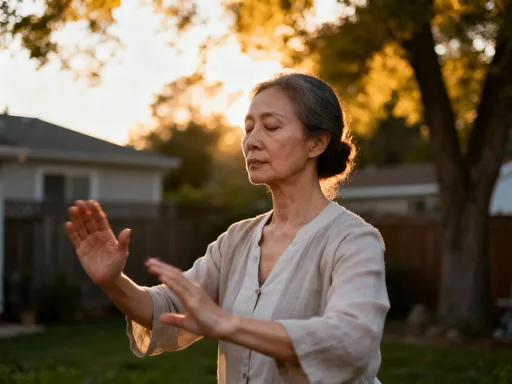
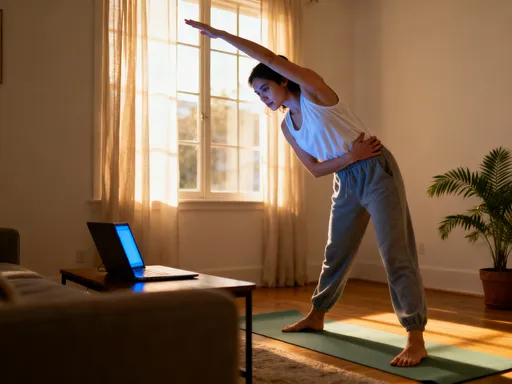
At first glance, qigong might seem too simple to make a difference. It involves slow, deliberate movements, coordinated with deep breathing and focused awareness. There’s no sweat, no heart-pounding exertion, no measurable reps or sets. Compared to the fitness culture that glorifies intensity, qigong appears almost passive. But that simplicity is precisely what made it sustainable for me. Unlike the workout programs I had cycled through—each demanding more time, energy, and discipline—qigong asked only for presence. I began with just five minutes a day, following a beginner’s video in the quiet of my living room before the household woke up. No special equipment, no gym membership, no pressure to perform.
What surprised me was how quickly I noticed subtle changes. Within the first week, I felt calmer in the mornings. My mind didn’t race as much. I wasn’t suddenly bursting with energy, but the sharp edges of anxiety had softened. I began to look forward to those few minutes, not as another item on my to-do list, but as a rare moment of stillness. Over time, I extended my practice to ten, then fifteen minutes. I learned basic forms like “Lifting the Sky” and “Separating Heaven and Earth,” movements designed to open the body’s energy channels and promote circulation. The emphasis was never on perfection, but on awareness—feeling the shift of weight, the rhythm of breath, the alignment of posture.
Unlike high-effort exercise, which often left me depleted, qigong seemed to replenish me. I started to notice improvements in areas I hadn’t targeted directly. My sleep became more consistent. I woke up less frequently during the night. My digestion improved, and I felt more grounded during stressful moments—like when the kids argued in the backseat or a work deadline loomed. These weren’t dramatic breakthroughs, but quiet victories. Most importantly, I didn’t dread the practice. I never had to convince myself to do it. It became a refuge, a way to return to myself amid the noise of daily life. In a world that equates health with hustle, qigong offered a different message: healing can be gentle, and consistency matters more than intensity.
Beyond Feeling Good: The Science Behind the Stillness
While my personal experience with qigong was positive, I wanted to understand whether there was scientific support for its benefits. What I found was a growing body of research suggesting that mind-body practices like qigong can have measurable effects on the nervous system, stress response, and overall well-being. Studies have shown that regular qigong practice is associated with reduced levels of cortisol, the hormone linked to chronic stress. Lower cortisol levels correlate with improved immune function, better sleep, and reduced inflammation—key factors in long-term health.
One of the most compelling findings relates to the autonomic nervous system, which regulates involuntary functions like heart rate, digestion, and respiration. Qigong appears to enhance parasympathetic tone—the “rest and digest” branch of the system—helping the body shift out of constant “fight or flight” mode. This is especially important for individuals experiencing chronic stress, where the sympathetic nervous system remains overactive. By promoting relaxation responses, qigong supports nervous system regulation, which can lead to improved emotional stability and physical resilience.
Another area of research focuses on heart rate variability (HRV), a marker of cardiovascular health and stress resilience. Higher HRV indicates that the heart can adapt efficiently to changing demands, a sign of a flexible, well-regulated system. Several studies have found that qigong practitioners exhibit improved HRV over time, suggesting enhanced physiological adaptability. Additionally, research published in journals such as *Evidence-Based Complementary and Alternative Medicine* has documented benefits including reduced anxiety, improved balance in older adults, and better quality of life in people with chronic conditions like fibromyalgia and hypertension.
It’s important to note that these benefits develop gradually. Unlike pharmaceutical interventions that may produce rapid effects, qigong works through cumulative, subtle shifts. This isn’t a quick fix, but a long-term investment in resilience. While individual experiences vary, the scientific consensus supports the idea that slow, mindful movement can positively influence both mental and physical health. For me, knowing that my practice had a basis in physiology—not just subjective feeling—added a layer of confidence and motivation to continue.
The Missing Piece: Why I Started Tracking My Progress
As the weeks passed, I noticed positive changes, but they were easy to overlook. I felt more centered, but was it the qigong—or just a better week? My sleep improved, but could that be due to the new mattress or the absence of late-night screen time? Without a way to measure progress, the benefits felt vague, almost imaginary. I realized that to truly understand the impact of my practice, I needed a way to observe it more intentionally. That’s when I began tracking—not with wearable devices or complex apps, but with simple, low-tech methods.
I started a health journal, noting three things each day: my energy level on a scale of 1 to 10, the quality of my sleep (did I wake up refreshed?), and my emotional state (calm, anxious, irritable, etc.). I also marked whether I had practiced qigong that day. At first, the data seemed random. But after a few weeks, patterns emerged. I saw that on days following consistent practice, my morning energy was higher. I was less likely to experience the midday slump that used to derail my productivity. I also noticed that on days I skipped practice, my mood was more reactive—small frustrations felt larger, and I was quicker to snap at my family.
One of the most revealing insights came from tracking sleep. I discovered that even on nights when I went to bed late, if I had practiced qigong earlier, I still woke up feeling more rested. This suggested that the practice wasn’t just affecting my mind during the day, but influencing my body’s ability to recover at night. Tracking also helped me identify external factors—like caffeine after noon or screen use before bed—that undermined my progress. Rather than blaming myself, I began to see these as modifiable variables. The journal didn’t turn me into a perfectionist; instead, it gave me clarity. It transformed vague feelings into observable patterns, making it easier to make informed choices about my well-being.
How to Monitor Without Obsessing: A Balanced Approach
One concern I had about tracking was the risk of becoming obsessive. In a culture that often equates health with metrics—steps taken, calories burned, hours slept—there’s a danger of turning self-care into a numbers game. I didn’t want to trade one form of stress for another. My goal wasn’t to achieve perfect scores, but to cultivate awareness. So I adopted a balanced approach to monitoring, one that emphasized observation over judgment.
I limited my tracking to three key areas: energy rhythm, emotional stability, and physical comfort. Instead of logging every hour, I did a brief weekly check-in, reviewing my notes every Sunday evening. This gave me enough data to spot trends without drowning in details. I used a simple notebook, though some may prefer a basic app like Daylio or a notes file on their phone. The key was consistency, not complexity. I also avoided tracking every single day—missing a few entries didn’t invalidate the process. What mattered was the overall picture.
I reminded myself that fluctuations are normal. Some days would naturally be lower in energy or higher in stress, and that was okay. The purpose of tracking wasn’t to eliminate variation, but to understand it. When I noticed a pattern—say, lower energy after three consecutive days without practice—I could respond with compassion, not criticism. I might decide to shorten my practice the next day rather than skip it entirely. Or I might recognize that a particularly busy week required extra self-care, so I’d add a midday breathing break.
This approach turned monitoring into a tool for self-kindness, not self-punishment. It helped me tune into my body’s needs without judgment. Over time, I became more intuitive—less reliant on the journal, more attuned to subtle cues. I could sense when I needed rest, when I needed movement, when I needed stillness. The data didn’t replace inner wisdom; it helped me access it more clearly.
Building the Habit: Making Qigong a Lifelong Practice
Sustaining any new habit requires more than motivation—it requires strategy. In the beginning, I tied my qigong practice to an existing routine: right after I made my morning tea, before checking my phone. This “habit stacking” technique made it easier to remember and reduced the mental effort of deciding when to practice. I also kept my practice space simple—a folded mat by the window, visible as a gentle reminder.
There were days I missed. Some mornings were too chaotic, others too exhausting. Instead of abandoning the practice, I learned to forgive myself. I adopted the “never miss twice” rule—if I skipped one day, I made sure to return the next. This prevented a single lapse from turning into a full relapse. I also allowed the practice to evolve. After a few months, I moved from following guided videos to practicing from memory, allowing space for intuitive movement. Sometimes I’d linger in a posture that felt especially nourishing; other times, I’d shorten the session if time was short.
What surprised me was how the benefits deepened over time. After six months, I noticed not just better energy and mood, but a stronger sense of embodiment—feeling more connected to my body’s signals. I could sense tension before it turned into pain, fatigue before it became burnout. This heightened awareness extended beyond the practice itself, influencing how I moved through my day. I stood with better posture, breathed more deeply during stressful moments, and paused before reacting emotionally.
Qigong became less of a routine and more of a way of being. It wasn’t something I did to fix myself, but a way of honoring my body’s need for balance. Progress wasn’t linear—some weeks felt like steps forward, others like steps back—but over time, the overall trajectory was upward. The key was persistence, not perfection. By showing up consistently, even in small ways, I built a foundation of resilience that supported every area of my life.
When to Seek Support: Balancing Self-Care and Professional Guidance
While qigong and self-monitoring have been powerful tools, I’ve never viewed them as substitutes for professional medical care. There was a period when I experienced persistent joint pain, and despite my practice, the discomfort didn’t improve. I could have dismissed it as part of aging or stress, but instead, I consulted my primary care provider. After an evaluation, I was diagnosed with an early stage of arthritis—a condition that required medical management. This experience reinforced an important truth: self-awareness is valuable, but it doesn’t replace clinical expertise.
Monitoring my symptoms actually helped me communicate more effectively with my doctor. Instead of saying, “My joints hurt sometimes,” I could say, “The pain is worse on days with high stress and low activity, and it improves after gentle movement.” This level of detail allowed for a more informed discussion and better-tailored recommendations. My doctor supported my qigong practice as a complementary approach, emphasizing that movement and stress reduction could support joint health, but medication and physical therapy were also necessary.
This balance—between self-care and professional guidance—is essential. Qigong is not a cure-all, nor is it meant to diagnose or treat specific diseases. It is a practice that supports overall well-being, enhances body awareness, and promotes resilience. When symptoms persist, worsen, or interfere with daily life, seeking medical advice is not a failure—it’s an act of responsibility. At the same time, being an informed, engaged participant in one’s health journey can lead to better outcomes. By combining personal insight with professional knowledge, we create a stronger, more comprehensive foundation for long-term wellness.
The journey from chronic fatigue to balanced energy wasn’t marked by a single breakthrough, but by daily acts of attention. It began with the decision to try something gentle instead of forceful, to listen instead of push. Qigong offered a way to reconnect with my body, not as a machine to be optimized, but as a living system that thrives on rhythm, rest, and awareness. What transformed my experience wasn’t just the practice itself, but the habit of noticing—of tracking energy, mood, and sleep with curiosity rather than criticism. This monitoring turned vague feelings into meaningful data, allowing me to make informed choices and recognize progress, even when it was slow.
Over time, I learned that wellness isn’t a destination to be reached, but a continuous process of tuning in. It’s about showing up for yourself, not perfectly, but consistently. Qigong’s power lies in its simplicity: a few minutes of movement, breath, and presence can ripple through the entire day. And when paired with mindful observation, it becomes more than a practice—it becomes a dialogue with the self. One breath, one movement, one quiet observation at a time, I rebuilt my energy, not through force, but through presence. This is the quiet transformation: not loud, not flashy, but deeply sustainable. And for anyone feeling drained, overwhelmed, or disconnected, it’s a reminder that healing can begin with something as simple as paying attention.